

How to Buy a Suppressor
It may seem like a lengthy process, but we promise it's not that hard.
1. Choose your suppressor
You’ll buy the suppressor prior to being able to take possession of it. Many suppressor owners refer to this as the stage where the suppressor is "jailed" until the paperwork is approved.
2. Choose your dealer
Pick a FFL dealer that has a valid SOT. (Not all dealers listed on our site have a SOT). We will attempt to contact the dealer you chose and request their FFL & SOT paperwork to forward to us which can take up to a few days. This is a very important part in the process, without your dealers FFL & SOT we cannot process your order. If you happen to have the dealers FFL & SOT paper please forward it to Support@spikerdefense.com. This can save a few days in the process. If you happen to pick a dealer without a SOT we will reach out to you with other options. Please let us know if you have any questions. Contact Us
3. Decide whether you’re registering as an Individual or a Trust
Individual - means no legal costs, less paperwork, and less chance of mistakes being made. This Registration allows you to solely own and possess the suppressor. This type does not allow the suppressor to be operated without the owner present. There is no prior setup needed to register as an individual on a Form 4. This is typically the fastest and most common registration type for suppressors.
Trust - A NFA trust has the benefit of allowing multiple person ownership – new owners can be added to the trust at any time as a "responsible persons" (All responsible persons must provide their finger prints anytime an item is added to the trust also) – and there’s property protection after death. Registering a suppressor with a trust allows you to own and operate the suppressor, along with any responsible persons listed in the trust. There are costs and setup required for a trust before buying your tax stamp and submitting the Form 4 to the ATF. If you are needing a new Trust we highly recommend National Gun Trusts. Check your local laws and regulations and consult with a lawyer if you would like to consider registering your suppressor to a trust.
4. Apply for a tax stamp
At the time of this writing, the ATF tax stamp is now $0. This is the paperwork you and/or dealer will submit to the ATF.

5. Submit a Form 4 or eForm 4 to the ATF through the dealer, whether in person or online.
This process includes:
-Personal information such as name, address, and social security number.
-Any Trust documents if filing as a Trust.
-Manufacturer, model, and serial number of the suppressor.
-Two fingerprint cards (paper or Electronic .EFT). If you would like electronic finger prints (.EFTs) done, Print Scan offers .EFTs at select UPS locations for a small fee. Be sure to select " I don't have a code" and "ATF" as the appointment type. EFTs can be used more than once so next time you wont need to send in a paper finger print card. *Appointments require two forms of ID.*
-Passport style photograph. (Most of the time this can be taken at your dealer, contact them to confirm)
6. Wait to be approved
The wait time typically varies from 90 days to as many as 9 months. Sometimes, it’s significantly faster than 90 days, we have had some customers approved in as little as 3 days when filing as an individual with electronic fingerprints. It all depends on the backlog at the ATF.
What information is needed to buy a suppressor?
Buying a suppressor involves the ATF Form 4, which means supplying a lot of personal information, and a suppressor tax stamp. The Form 4 also requires all information about the suppressor being purchased. The ATF form includes multiple forms that vary depending on whether you’re registering as an individual or NFA trust.
When registering as an individual, ATF Form 4 questions include but aren’t limited to your full, legal name, address, and phone number. A full fingerprint card that also lists your physical description must be done as well. You’ll also answer questions similar to those on a Form 4473 for firearms purchases, such as whether you’re a convicted felon or have ever been adjudicated mentally defective.
The photograph required for the Form 4 is a plain, unsmiling image like those used on passports and can be taken at multiple locations.
If you’re registering through an NFA trust, you will need the Form 4 and also ATF Form 5320.23. Both the individual and trust also require an FBI Form FD-258 fingerprint card and, as mentioned, passport style photo.
What should I bring to buy a suppressor?
When you visit your authorized dealer to buy a suppressor you’ll need to bring your payment method and patience for paperwork. If the dealer is not able to do fingerprints at their location, you will also need to bring either two FD-258 paper finger print cards or your electronic finger print file (.EFT). The dealer should help you with the paperwork for the ATF Form 4, or there will be a kiosk set up to walk you through the process.
Some authorized dealers or e-filing programs are also set up to help you take the necessary photograph. And while starting the purchase is simple, you won’t be going home with your suppressor that same day. It’s both straightforward and drawn out.
What are the legal requirements for buying a suppressor?
- Live in a state where suppressors are legal to possess.
- Resident of the United States.
- Apply for a Tax Stamp. (Be aware that each suppressor or NFA item being purchased requires a separate tax stamp).
- Minimum age of 21 years old.
- Meet legal requirements to purchase a firearm and pass a background check.
- Supply your local Chief Law Enforcement Officer (CLEO) with a copy of the ATF Form 4. Most dealers will do this for you.
Can you take your own fingerprints for the ATF Form 4?
Print Scan offers .EFTs to be done at select UPS locations. Be sure to select "ATF" as the appointment type.
If you decide to take your fingerprints, you must use an FD-258 Fingerprint Card. Ensure your fingerprints aren’t smudged or of poor quality for the ATF. It isn’t impossible, but it can be a challenge. Also, some states require Form 4 fingerprints to be done by law enforcement. Always check your local laws before proceeding.
If you’d prefer to have your fingerprints done by someone else, there are a few ways to accomplish that: Local law enforcement agency Third-party businesses that provide the correct cards.
When you get your fingerprint cards done for your Form 4, it’s worth considering paying for an extra pair of cards for future use.
What states allow people to own suppressors?
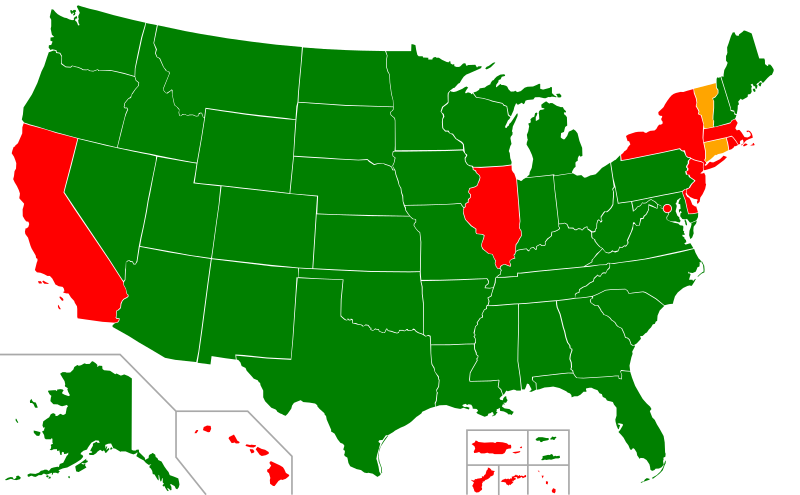
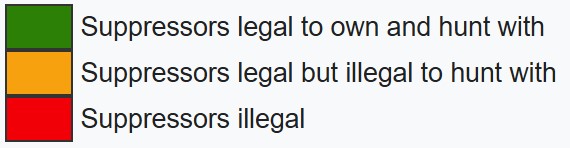
States that don’t allow civilians to own suppressors include California, Delaware, Hawaii, Illinois, Massachusetts, New Jersey, New York, and Rhode Island. Washington, D.C., also doesn’t allow civilians to have suppressors.
Now that you’ve learned how to buy a suppressor, it’s time to locate a dealer and get the process started. Suppressors protect your hearing and the hearing of those around you, help you leave less of an auditory footprint on the area in which you’re shooting, and create a quieter environment in general.
* This article/page is meant for informational purposes only and should not be construed as legal advice. If you have a question about the law, consult a qualified attorney. *
© 2026 Spiker Defense LLC
- All rights reserved